
 Written by
 Anoushka Kashyap
Research Intern,
Jindal Centre for the Global South,
O.P. Jindal Global University, India
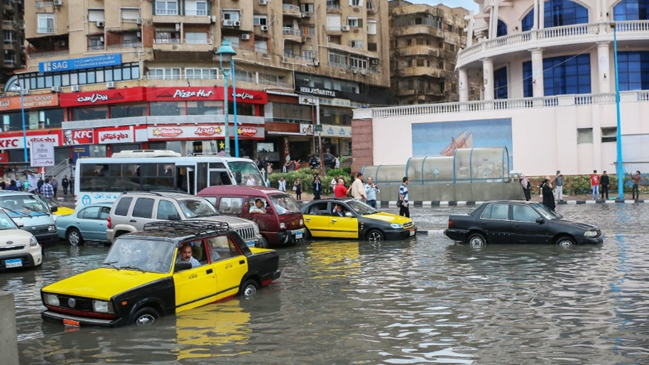
“To all of you who choose to look the other way every day because you seem more frightened of the changes that can prevent catastrophic climate change than the catastrophic climate change itself. Your silence is worst of all.” ~Greta Thunberg, 2018
This quote resonates with us as the Earth has become more vulnerable than ever due to the exploitation and overuse of its natural resources. This article focuses on Climate Change in Egypt, the adversities faced by Egyptians, its upcoming developments and agendas for sustainable development, and the steps taken to improve its climatic conditions.
Climate Crisis in Egypt–
Egypt is highly vulnerable to climate change and continues to face adversities and increased heat waves, dust storms, rising sea levels, droughts, and water scarcity. The Nile River is threatened by a rise in the sea level that has made the country vulnerable and which has further led the country to come up with new initiatives and agendas to tackle climate change like ‘Egypt Vision 2030’ and ‘National Climate Change Strategy 2050’ (NCCS). Egypt has now become one of the first countries to respond to the threats and dangers of climate change as per the ‘equity principle of common’ in 1994.
Reasons for climate crisis faced by Egypt-
‘The State of the Climate in Africa 2019 Report’ mentioned the “increasing climate change threats like human health, food and water security and socio-economic development in Africa. Because of this, we need accurate and current data for adaptation planning” as per the author, Ovais Sarmad who is ‘The Deputy Executive Secretary of UN Climate Change’.
There are various reasons for climate change in Africa, like rising sea levels, coastal erosion, food security, health, and economic impacts. Over 95% of Egypt’s water budget is generated outside its territory. The country has an expanding population and limited resources. Water-related problems are one of the causes of climatic change in Egypt. Due to Egypt’s vulnerability to the climate crisis, the USA government has decided to work with the Egyptian government and its private sector to fight against the crisis. (Change, 2020)
The most prominent challenges faced by Egyptians–
- Agriculture: The farmers of Egypt face various problems. Since farming and agriculture are the crucial means of livelihood for Egyptian farmers, the small farmers are facing a wide variety of challenges ranging from changing temperatures, winds, and water scarcity, which are negatively impacting the quality of the crops, further leading to improper growth of crops and their quantity. The water has decreased, which is, in turn, creating problems in the agrarian sector. The agricultural production of Egypt is estimated to reduce by the year 2060. (UNDP, 2013)
- Water: Water is one such natural resource that is vital and necessary for the entire world’s survival. The Nile River Basin, where most of the Egyptian population resides, is the primary source of fresh water supply. Water scarcity is a phenomenon that is not only limited to Egypt or Africa but also to the entire world. It is a vital source in Egypt and has become highly scarce.
USAID has increased its efforts to improve clean water and hygene for Egypt by helping in the construction of water services and sanitation. The vision is to achieve a competitive and knowledge-based economy. Egypt is a country surrounded by desert and semi-desert type climate. It has a hot and dry climate. (Abdelwahab, 2022)
| Year | Annual | DJF | JJA | Annual | DJF | JJA |
| 2030 | 1.0 (0.15) | 0.8 (0.21) | 1.1 (0.18) | -5.2 (7.93) | -8.9 (3.01) | 10.7 (26.35) |
| 2050 | 1.4 (0.22) | 1.2 (0.30) | 1.7 (0.26) | -7.6 (11.46) | -12.8 (4.35) | 15.4 (38.07) |
Egypt has an uneven distribution in several areas like distribution of population, economic activities, and use of land. The impact of climate change in coastal areas like the rise in sea level is a serious issue regarding the impact of climate change in the country. The water levels are rising in the Nile River due to many factors like reduction in sedimentation, the ongoing construction of High Aswan Dam. This has a direct impact on the agriculture and agrarian sector of Egypt. (Susmita Dasgupta, 2007)
EGYPT’S 2030 VISION-
Egypt has major and broad plans to build a government that focuses intelligently on the environment and climatic conditions of Egypt to protect the environment and the economy of the country. Many African countries have agreed upon a common agenda for sustainable development which is an idea or a concept that has been adopted as a framework that will improve the climate status of the country which in turn will help benefit the environment of the country that will be beneficial for the present and future generations. (Cooperation, 2016)
The government of Egypt has introduced some reform agendas in various areas, including energy and environment conservation, under the “Egypt 2030 Vision” Document. The document was unveiled in February 2016 by the Egyptian government. It also included an objective to ensure energy access, which will increase renewable energy by 2030 under ‘Egypt’s 2030 Vision’ document. (El-Megharbel, 2015)
Other plans include protecting the environment by improving its ecosystem and the ability of the nation to face natural hazards. The 2030 vision aims to end poverty, meet the goal of zero emissions, and implement the 2015 Paris Agreement Accords. The main objective of this project is to make a new Egypt that will emerge with a balanced and improved economy. The government also aims to change the climate by developing the environment and urban areas.
The vision’s primary goal is to cut down any harm that causes the environment and climate of Egypt to disrupt, dismantle and make the country greener and safer and to save the livelihoods of people as the entire country depends on sectors like agriculture and most resources of the country are developed or come from the river Nile which is deteriorating because of lower sediments and climate changes.
The National Climate Change Strategy of Egypt by 2050 (NCCS)

The next important agenda that Egypt envisions accomplishing is the NCCS (National Climate Change Strategy 2050). This strategy is made in such a way to include all aspects of climate change in one piece of paper so that it ensures climate change and the preservation of the country. This was developed and requested by National Council for Climate Change. ((NCCS), 2023)
The agenda includes five important goals for climate change like achieving Sustainable Economic Growth and Low-Emission Development in Various Sectors, Enhancing Adaptive Capacity and Resilience to Climate Change and Alleviating the Associated Negative Impacts Enhancing Climate Change Action Governance, Enhancing Climate Financing Infrastructure, Enhancing Scientific Research, Technology Transfer, Knowledge Management and Awareness to Combat Climate Change. (Egypt National Climate Change Strategy (NCCS) 2050, 2022)
Egypt has launched a billion-dollar agenda of NCCS to make a greener and ecosystem-friendly country by the year 2050. The idea includes adaptation and migration programs like energy, transportation, agriculture and water resources. the total cost of migration programs is estimated to be around $211 billion, and adaptation programs are about $113 billion. (Guvvadi, 2023)
Egypt has become one of the first countries to respond to the threats faced because of climate change. The goal aims to bring economic growth and preserve green gas spaces; it coordinates with the banking sector to bring in more climate change-related projects, including climate protection programs like the Green Bond framework, reducing greenhouse emissions in various sectors of the country. (Wes, 2022)
Egypt is planning various strategies like preparing a warning and an alert system to keep people vigilant of the climate. It focuses on climate change, understanding its adversities, and making and forming agendas for future generations.
Conclusion and Recommendations: –
The government of Egypt has several projects to improve the climate conditions and has taken vital steps for the same, as discussed above. The country has launched many agendas, such as the NCCS, which they plan to achieve by the year 2050, and an agenda known as ‘Egypt’s 2030 Vision’.
Although Egypt has taken the necessary steps to improve the conditions of the climate, they still has a long way to go, and it can collaborate with other countries that are facing major environmental issues like Brazil and collaborate with them to enhance its goals and agenda by using the necessary tools and help needed to help save the planet.
The two agendas discussed in the paper look promising and impactful to achieve the required goals. Egypt has been vigilant and is taking the necessary steps in response to deteriorating climatic and environmental conditions. Although, the country can initiate as many countries as possible by promoting climate change as climate change affects the world. This way, they can also get help and ideas from other countries and vice versa, bringing massive changes to protect the climate.
References
(NCCS), E. N. (2023, June 14). Food and Agricultural Organisation. Retrieved from https://faolex.fao.org/docs/pdf/egy213202E.pdf
Abdelwahab, M. (2022, September). Water and Sanitation. Retrieved from USAID : https://www.usaid.gov/sites/default/files/2023-03/EG-Water-Fact-Sheet-EN-2022.pdf
Change, U. N. (2020, October 27th ). Climate Change Is an Increasing Threat to Africa. Retrieved from UNFCC: https://unfccc.int/news/climate-change-is-an-increasing-threat-to-africa
Cooperation, M. o. (2016). Egypt National Review Report for input to the 2016 HLPF. Sustainable development goals, 59.
Egypt National Climate Change Strategy (NCCS) 2050. (2022, May). Retrieved from Grantham Research Institute on Climate Change and the Environment : https://www.climate-laws.org/geographies/egypt/policies/egypt-national-climate-change-strategy-nccs-2050
Egypt Vision 2030. (n.d.). Retrieved from unesco Diversity of Cultural Expressions: https://en.unesco.org/creativity/policy-monitoring-platform/egypt-vision-2030-1
El-Megharbel, N. (2015). Sustainable Development Strategy: Egypt’s vision 2030 And Planning Reform. Integrated Approaches to Sustainable Development Planning and Implementation, 21.
Guvvadi, N. (2023, September 4). Indian Council of World Affairs. Retrieved from Egypt’s Water, Food, and Energy Security Nexus: Challenges and Opportunities: https://www.icwa.in/show_content.php?lang=1&level=1&ls_id=9909&lid=6337
Khashab, D. A. (2021, November 8). Egypt National Climate Change Adaptive Strategy 2050. Retrieved from energycentral: https://energycentral.com/c/cp/egypt-national-climate-change-adaptive-strategy-2050
Susmita Dasgupta, B. L. (2007). The Impact of Sea Level Rise on Developing Countries: A Comparative Analysis . World Bank Document, 51.
Thunberg, G. (2018, September 7). Greta Thunberg: Our lives are in your hands. We Don’t Have Time. Medium.
UNDP. (2013). Potential Impacts of Climate Change on the Egyptian Economy. Egypt: Joel Smith, Leland Deck and Stratus Consulting Inc.
USAID FROM THE AMERICAN PEOPLE. (n.d.). Retrieved from Climate Response: https://www.usaid.gov/egypt/climate-response
Wes, M. (2022, April 19). Egypt: Acting Against Climate Change for A Healthier, More Prosperous Future. Retrieved from The World Bank: https://www.worldbank.org/en/news/opinion/2022/04/19/-egypt-acting-against-climate-change-for-a-healthier-more-prosperous-future
The opinions expressed in this article are those of the author (s). They do not purport to reflect the opinions or views of the Jindal Centre for the Global South or its members.
 Global South Studies Series